Will Poulter and Noah Centineo On Making Union County, With Help From Those Who Lived It
Abigail Glasgow speaks with filmmaker Adam Meeks, actors Will Poulter and Noah Centineo, and social worker Annette Deao about bringing their depiction of an actual Ohio recovery court program to life.
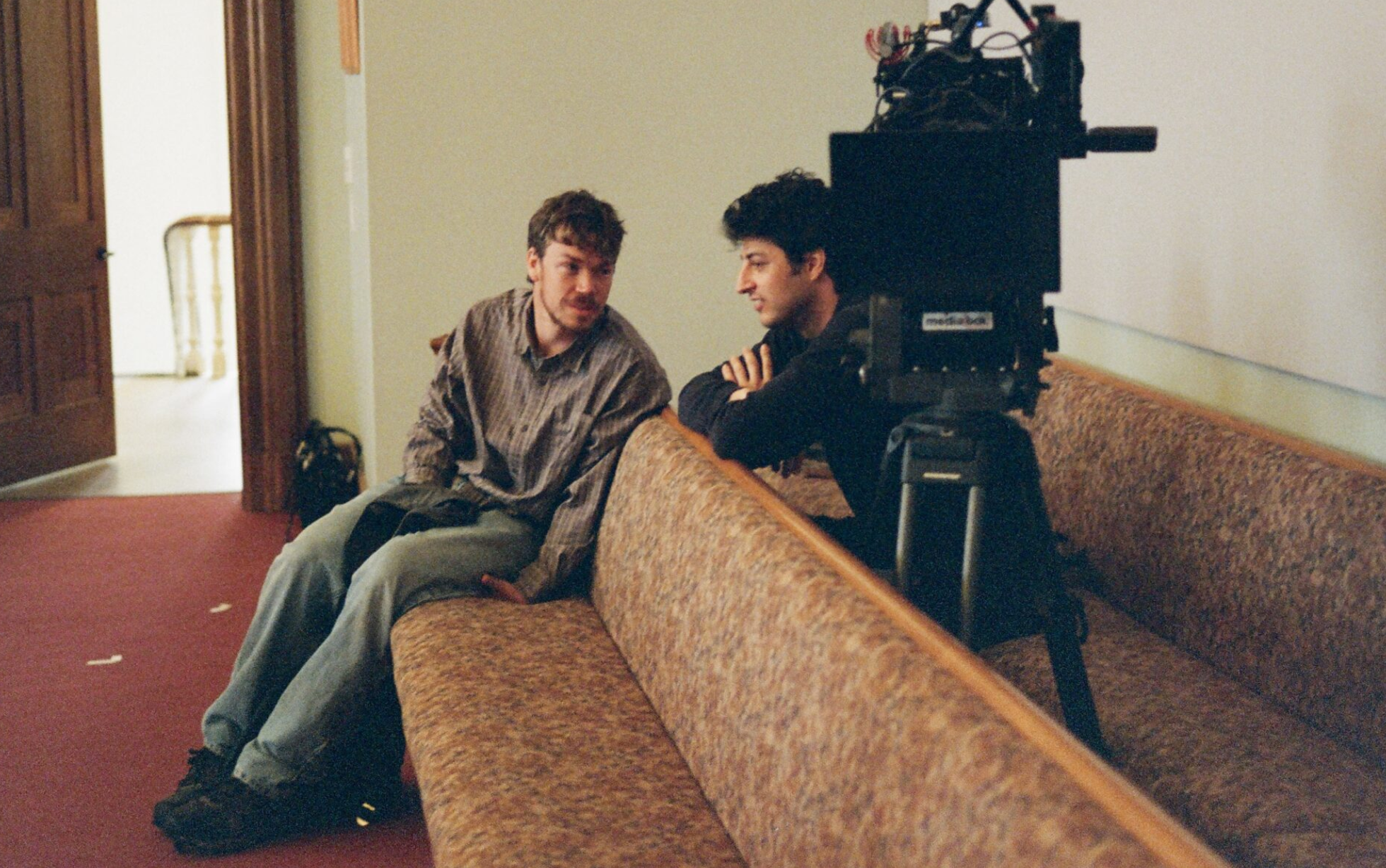
Adam Meeks and Will Poulter while shooting Union County. Photo: Leia Jospe
Click here to read on elephant Mag
Adam Meeks and Annette Deao met at a house concert in Zanesfield, Ohio. It was the spring of 2019, and Meeks, an emerging filmmaker, was on the outskirts of Columbus to visit family members and deepen his understanding of the opioid epidemic’s impact in the area. More specifically, his uncle was friends with a judge presiding over a court-mandated drug program, and Meeks was keen to learn about these local recovery infrastructures. In between sets, he was introduced to Deao, a therapist across various court programs, including the one he was researching. In the middle of a neighbor’s living room, the 68-year-old social worker and the Brooklyn-based writer-director became fast friends.
This past month, nearly eight years after that first meeting, Meeks debuted Union County. Starring Will Poulter and Noah Centineo as foster brothers navigating the aforementioned recovery program, the film came to life through countless phone and Zoom calls with Deao, audits of court appearances and NA meetings, visits to local facilities like the county jail, and, most importantly, intimate conversations and extended campfire gatherings with participants of the rural Ohio program. The result is an honest portrait of grief as a universal experience, a prompt to consider how we are accountable to one another, and, in Poulter’s words, a “faithful reflection” of what Meeks calls a “community that shows up for itself.” As for Deao — the social worker who has spent over 40 years taking late-night client calls and bringing participants chocolates, paint brushes, or Dallas Cowboys paraphernalia when they’ve graduated to a new recovery stage — she plays herself.
It was always clear to Meeks that he wanted to tell this type of story in collaboration with people impacted by addiction. The choice to blend documentary with fictional narratives came from wanting to avoid “imposing dramatic expectations on somebody going through the program,” the director shares. He found in Poulter and Centineo artists who could shoulder the responsibility that comes with representing real-life stories of those struggling with substance abuse — from a friend of Meeks’ living in their car when first starting the program to another participant calling Annette in the middle of the night outside of their dealer’s house, tempted to use to ease the pain after losing a foster brother.
Through this amalgamation, the audience meets Poulter’s Cody, a shier brother who possesses a wholesome fragility while slowly checking off his recovery boxes, alongside Centineo’s Jack, the gregarious, lighthearted opposite who is on the verge of relapsing. We watch as these two experience the mundanity of recovery — the day-to-day grind of getting from point A to point B, applying for a job, or attending a friend’s graduation — amidst its challenges. Deao and Meeks created records for both Poulter’s and Centineo’s characters, including court sheets that actual program participants have detailing previous incarceration stints, substance abuse history, and current conditions.
The actors’ extensive backgrounds come to life in the film’s opening scene, which immediately merges reality with fiction. With a camera placed between them and the judge, participants quite literally went through the motions of a typical Monday afternoon at their program’s weekly court hearing, celebrating anything from securing housing to being newly present and sober amongst loved ones. Meeks intentionally set the camera in front of participants as they gave their testimonies, giving them “a chance to step up and own this space, represent themselves, and feel dignified.” Meanwhile, Poulter and Centineo sat in the courtroom waiting for their fictional names to be called. Across these appearances and facilitated support meetings that also mixed in monologues from Poulter, Deao served as the bridge to a consistent informed consent process where program participants were always given the ability to opt out of the film. Cast, crew, and participants alike remained rooted in the fact that recovery would take precedence over any film deliverable. “There was no sense of sporadicness or urgency,” Centineo says of Meeks’ pacing and care for everyone present. This intention made for something that was generative rather than extractive, allowing Union County to be a genuine offering to communities impacted by substance abuse.
The program and the filmmaking process mirror one another, both serving as alternative models to political and cultural norms. When it comes to the former, Deao very clearly articulates that “jail doesn’t work, or I wouldn’t have a job.” Union County shows audiences that treating substance abuse as a health issue rather than a crime is not a utopian thought exercise. The film is an invitation to those less proximate to the issue to consider what already exists as a possibility outside of incarceration, to consider that connecting and nurturing people dealing with the day-to-day struggles of addiction might just keep us safer than cages. “They’re us, they’re our neighbors, our relatives,” Deao shares while reflecting on her community. “We can hold them accountable with love.”
Simultaneously, the process of making Union County presents an alternative, falling within an emerging lineage of works centering directly impacted people. It very much parallels how the Oscar-nominated film Sing Sing came to life; spotlighting a real-life theater troupe inside the eponymously named prison, director Greg Kwedar worked with program graduates as both actors and script collaborators. We’ve long witnessed chefs, athletes, and musicians join film sets to train actors. Now, Meeks, Kwedar, and others are making Hollywood more aware of the crucial role experts by way of lived experience play in the quality of film. “A lot of the best actors will do exposure or integration with the community, whether or not the filmmaker is supporting or organizing it,” Centineo shares when reflecting on this verité approach. “If you’re trying to set out to make something as close to reality as possible, you should embed yourself within the people that are actually living it.”
By remaining enmeshed in and in service to this community, Poulter shares that Union County “inherently goes against a lot of the misconceptions about people that experience substance abuse or incarceration, ironically often through the screen.” He underlines that plots tend to center the devastation of addiction because “therein lies the sensationalized themes we’re used to seeing; but there was a collective sense that this film was focused on the positive side of recovery more than anything else.” The film seamlessly gives space for interpersonal moments that reveal both how society has structurally failed those who are mentally and fiscally vulnerable while also presenting what is required of us to repair and move forward in our respective communities.
For Kerry, a participant featured in a support group scene and key consultant for Meeks when writing the script, seeing herself depicted in this type of project was a point of pride. When she first watched the full film back with her 21-year-old daughter, she “started crying because it’s been a long time since I felt this good.” Reflecting on her contribution to the film, Kerry shares that her moment on screen is something her daughter “is always going to have” as a record of her recovery and a reminder of a leap of faith she took to experience something new. “New opportunities are part of being sober,” she says of how the film folded into her process, “and so is passing the message; it’s my responsibility to help someone else.” As of the beginning of August, Kerry celebrated two years, one month, and two weeks sober.
Union County is an ode to the courage of participants like Kerry who opened themselves up as a gesture to the many who share their experience. The film underscores that addiction is not a monolith, recovery is not linear, and that grief, shame, connection, and repair are universal. Perhaps most importantly, rather than assigning moral value to substance abuse, the film illustrates what it looks like to instead assign dignity to every person regardless of their circumstances because, in Poulter’s words, “everyone’s experience is worthy of unique attention. The moment someone is labeled an ‘addict’ or characterized as a ‘criminal’, we don’t afford them the empathy and compassion that we would extend to a stranger whom we have not yet labeled,” the actor continues. “We forget the life that they’ve lived prior to that, and we hold them to a different set of standards that we wouldn’t even expect of ourselves.”
In tandem with the film’s theatrical release, the cast and crew have worked to bring Union County to local impacted communities, prisons, and conferences that gather health and legal practitioners who could build alternative programs. Following a screening in Dallas, Texas, Deao shares that a woman approached her in tears, saying that she had lost her son to an overdose and was carrying so much guilt. Responding to a scene where Deao says that a character’s similar death is no one’s fault, the woman hugged Deao. “That is exactly what I needed to hear,” she then uttered. “You have set me free.”